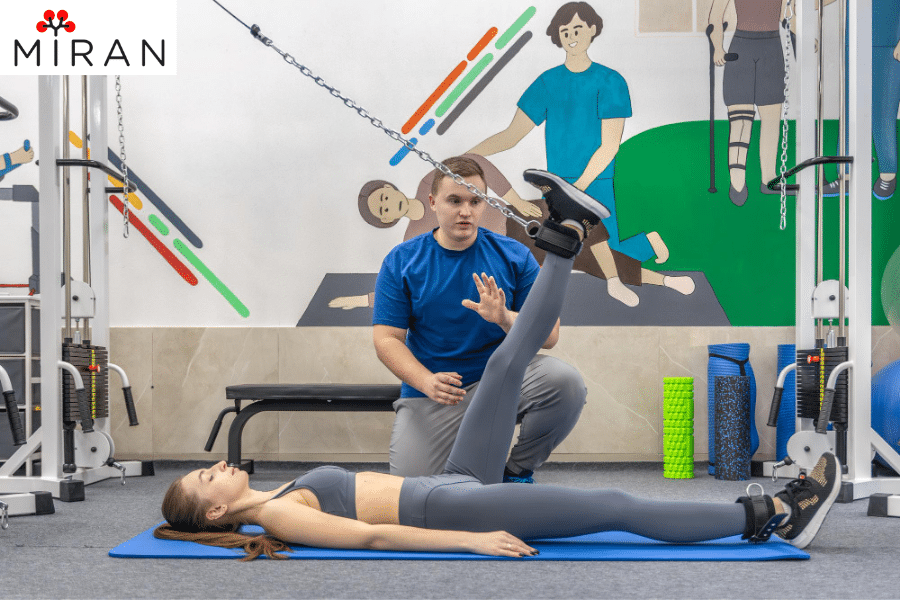

Fall Prevention Program | Improve Balance and Safety | Miran
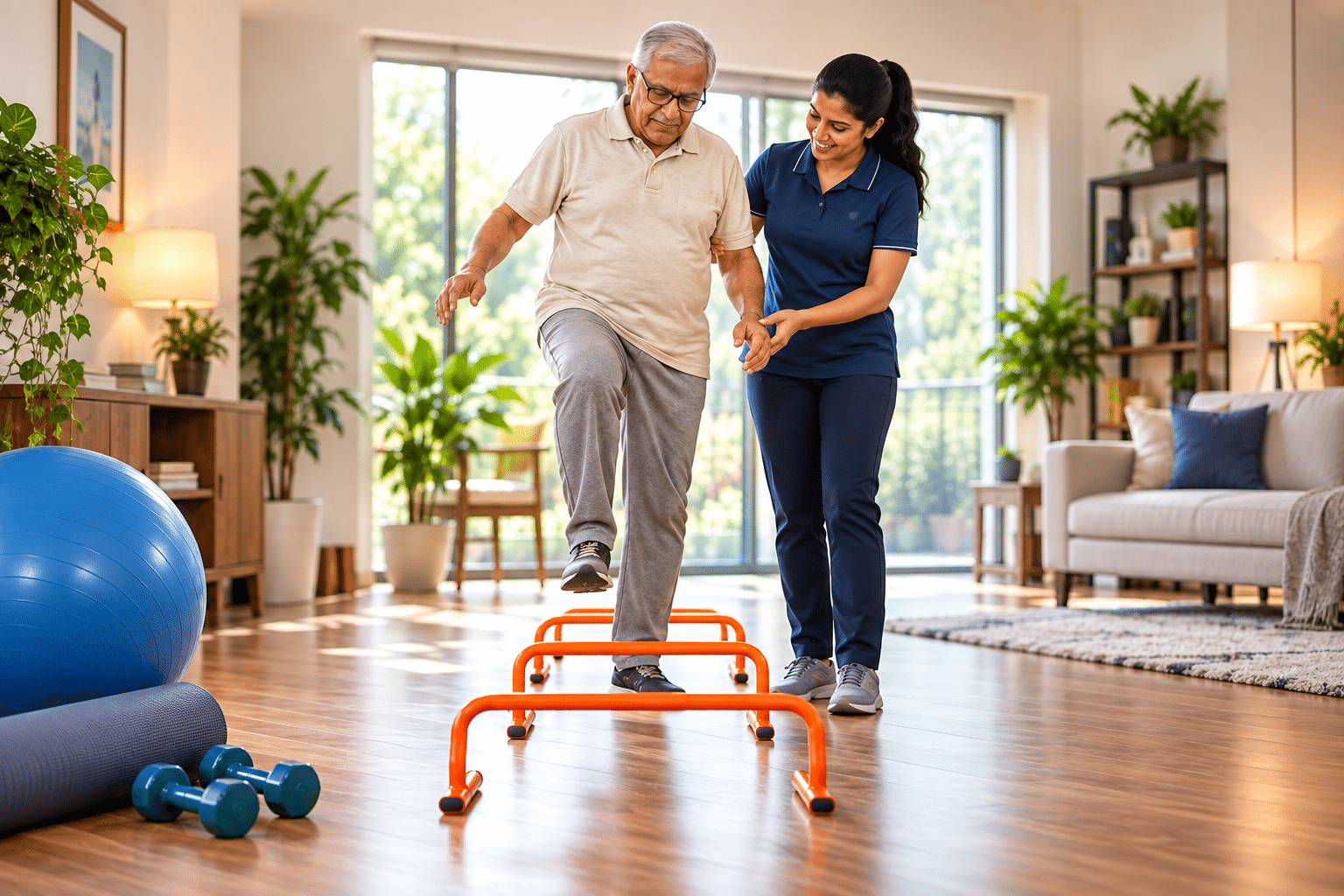
A fall can happen in an instant, but its effects can last much longer. An unexpected slip or loss of balance can lead to injury, loss of confidence and increased fear of independent movement.
Another problem can be inactivity after a fall, especially for older adults. Less movement may be a sign of weaker muscles, less balance, and less physical confidence, making everyday movement feel even harder.
A structured fall prevention program takes a proactive approach. Instead of focusing only on what happens after a fall, it works on the physical abilities and movement habits that can help people feel safer and more confident in their daily routines.
What Makes Someone More Likely to Fall?
Falls are rarely caused by one single factor. Several physical and environmental factors can contribute to instability.
Common factors may include:
- Reduced lower-body strength
- Poor balance or coordination
- Difficulty walking or changing direction
- Stiff joints
- Reduced reaction speed
- Previous falls
- Fear of falling
- Uneven or cluttered surroundings
- Difficulty getting up from a chair or bed
Understanding these factors is an important first step in creating an effective fall prevention program.
The Fall Prevention Checklist
A useful way to understand fall prevention is to look at different areas of everyday movement.
- Balance – Good balance helps the body remain stable while standing, walking, reaching and changing direction.
A physiotherapist can prescribe specific exercises to challenge balance gradually. These could include controlled weight shifts, stepping activities, and directional change exercises.
The difficulty can be adjusted according to the person’s current ability.
- Leg Strength – Strong legs are essential for many everyday movements.
Standing from a chair, climbing stairs, stepping over an obstacle and maintaining stability while walking all require lower-body strength.
A fall prevention program may therefore include functional strengthening exercises such as:
- Practice sit-to-stands
- Squat with support
- Exercises in Steps
- Leg strengthening exercises
- Weight-bearing exercises under control
The goal is to improve usable strength rather than simply increase muscle size.
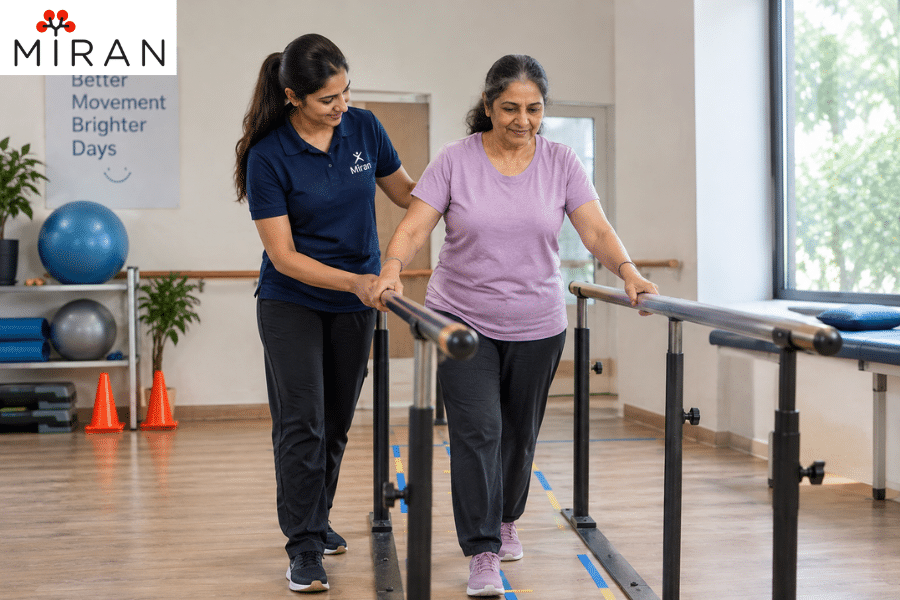
- Walking Ability – Walking is more than just moving forward. Step length, foot placement, posture, coordination and the ability to adjust speed can all affect stability.
A physiotherapy assessment can identify movement patterns that may need attention.
Exercises can then be selected to improve walking control and make everyday movement more efficient.
Why Is Confidence So Important?
“Physical ability is only one aspect of fall prevention.
Some people become scared of falling again after they have already fallen. They may begin to avoid stairs, going outside, social events or even unnecessary movement around the house.
That can help to reduce activity levels gradually.
A well-designed fall prevention programme can help break this cycle by gradually introducing movement. “Practicing certain skills and becoming more comfortable with your abilities could also improve confidence.
The objective is not to be risk-free. It is meant to help people understand their capabilities and move as safely as possible.
A Safer Home Can Make a Difference
Exercise is important, but the environment matters too.
Small changes around the home can reduce avoidable hazards.
Look around for:
Loose rugs:
Secure or remove rugs that may slide underfoot.
Clutter:
Keep walking paths clear, particularly around frequently used areas.
Poor lighting:
Make sure stairs, corridors and bathrooms are adequately illuminated.
Bathroom hazards:
Consider appropriate support and non-slip solutions where needed.
Frequently used items:
Keep everyday objects within comfortable reach instead of requiring unnecessary climbing or stretching.
These practical changes can complement physical training.
How Is a Fall Prevention Program Personalised?
Not everyone needs the same exercises.
A physiotherapist may consider:
Current balance:
How steady is the person while standing and walking?
Strength:
Are the legs strong enough for daily activities?
Mobility:
Are joint stiffness or movement restrictions affecting function?
Walking pattern:
Does the person have difficulty with stepping, turning or changing speed?
Daily routine:
Which activities are most important to the individual?
Previous falls:
What circumstances contributed to earlier incidents?
This information can help shape a more relevant rehabilitation plan.
Small Skills, Big Everyday Benefits
Fall prevention does not have to mean spending hours exercising.
Sometimes, improving a few important movement skills can make everyday activities feel more manageable.
For example:
Better sit-to-stand ability → Easier transfers from chairs.
Improved stepping control → Greater confidence when navigating obstacles.
Stronger legs → More support during walking and stairs.
Better balance → Greater stability during changes in direction.
Improved confidence → More willingness to stay physically active.
These improvements can work together to support independence.
When Should You Consider Professional Guidance?
A fall prevention program can be particularly valuable when someone notices increasing unsteadiness, difficulty walking, repeated falls or growing fear around movement.
It is better to address changes early rather than waiting for a serious fall to occur.
Professional assessment can help identify areas that need attention and determine which exercises are appropriate for the individual’s current physical abilities.
Making Safety Part of Everyday Movement
Fall prevention is not about living so cautiously that you avoid life. It’s not just about being able to do it physically but also about having the confidence to do it.
Supported balance, strength and mobility can make walking with family, visiting friends, moving around the home, shopping or enjoying a favourite activity feel more achievable.
A proactive fall prevention programme can thus be part of maintaining independence, rather than just a reaction to an accident.
Frequently Asked Questions
What is a fall prevention program?
A fall prevention program is a personalised rehabilitation approach that focuses on balance, strength, walking ability, coordination and confidence to support safer everyday movement.
What exercises are included in a fall prevention program?
Depending on the individual's needs, exercises may include sit-to-stands, controlled stepping, balance activities, leg strengthening, weight shifting and walking exercises.
Can physiotherapy help reduce the risk of falls?
Physiotherapy can identify physical factors affecting stability and provide suitable exercises to improve strength, balance, mobility and movement control.
Healthy Tips
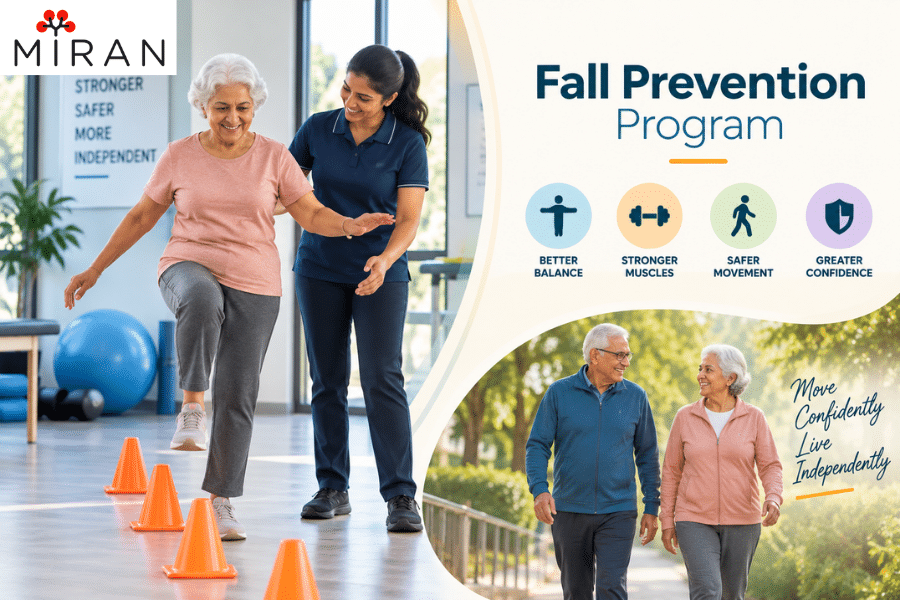
Staying steady is about more than balance alone. Stronger muscles, controlled movement, suitable surroundings and confidence all contribute to safer everyday mobility. With the right assessment and progressive exercises, individuals can work towards maintaining their independence and reducing avoidable risks. Miran Neuro Physiotherapy and Rehab Santacruz supports personalised rehabilitation that focuses on practical movement, individual goals and greater confidence in everyday life.
Image Reference: Magnific
Disclaimer: All trademarks, logos, and brand names are the property of their respective owners. All company, product, and service names used on this website are for identification purposes only. Use of these names, trademarks, and brands does not imply endorsement.