

With early and consistent neuro physiotherapy, we can slow the progression of the condition and help you regain strength, steadiness, and control over your day to day life just like many of our patients who’ve returned to living fully and independently without slowing down.

Parkinson’s Disease often starts subtly a slight tremor, a smaller step, a softer voice. Over time, it can lead to stiffness, slowness, changes in posture, freezing while walking, and even falls. Tasks that once felt automatic like buttoning a shirt, walking in a crowd, or writing begin to feel frustrating and effortful.
But what’s harder than the symptoms is what they take away – confidence, independence, and the ease of everyday life.
Living with Parkinson’s can feel unpredictable some days are easier than others. But neuro physiotherapy can bring back control over the small things that make a big difference: walking confidently, standing up without support, and feeling steady in a crowd.
At Miran, we commonly help patients with:
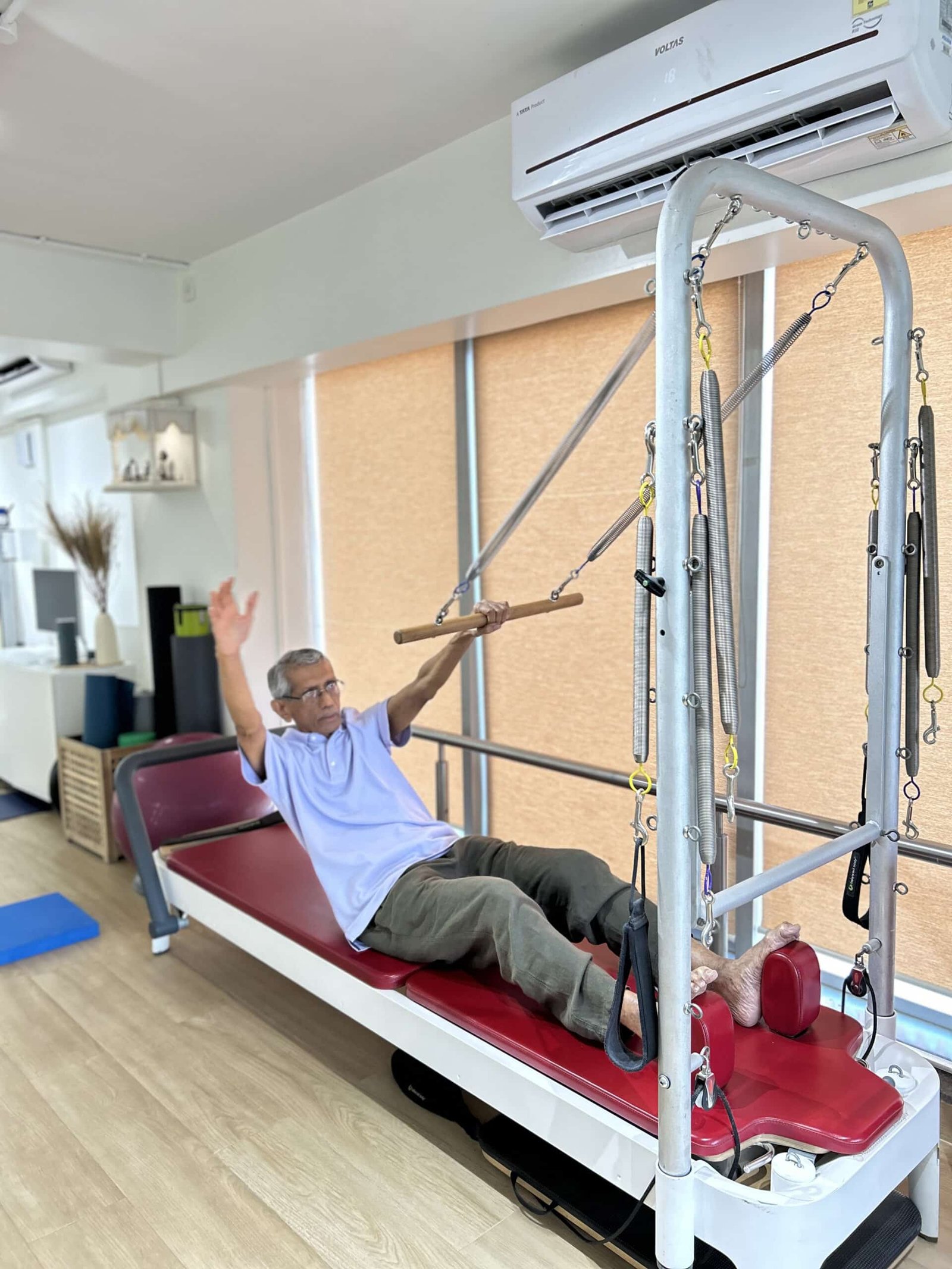
Parkinson’s doesn’t have a cure but movement can be improved. At Miran, we build a rehab plan around what youwant to get back to, and we use the tools that work best for your body and your stage of the condition.
We combine:
Every session is guided by a neuro physiotherapist trained in Parkinson’s care. We adapt our approach with you from early stage independence to later stage support.
1. When should I start physiotherapy after being diagnosed with Parkinson’s?
As early as possible. Starting therapy in the early stages can help slow physical decline, improve posture and walking, and preserve independence for longer.
2. Can therapy help even if I’ve had Parkinson’s for many years?
Yes. Even in later stages, physiotherapy can improve sitting balance, trunk strength, walking confidence, and reduce fall risk all at a pace that suits your energy and ability.
3. What symptoms can therapy help with?
We commonly address stiffness, slowness, freezing during walking, poor balance, reduced stride length, posture issues, hand coordination, and general mobility.
4. What is “freezing” and can therapy help with it?
Freezing is when your feet feel stuck while trying to walk. We teach cueing strategies like counting, rhythmic steps, or sound prompts to break the freeze and retrain smooth movement.
5. Do I need to be fit to start therapy?
Not at all. We work with all mobility levels from active walkers to those needing wheelchairs or assistance. Therapy is adapted to your stage, not the other way around.
6. Will I always need therapy, or is it short-term?
Parkinson’s is progressive, so therapy tends to be ongoing but it can be spaced out over time. Our goal is to teach strategies you and your family can also apply at home.
7. Can aquatherapy help with Parkinson’s?
Yes. The water supports your body, reduces fall risk, and allows smoother movement especially if you’re stiff, unsteady, or fearful of walking on land.
8. What role does robotics play in Parkinson’s rehab?
We use robotics to train walking rhythm, step quality, or hand movement especially when certain motions feel blocked or hesitant.
9. Do you work with caregivers too?
Absolutely. We guide families on safe transfers, posture support, fall prevention, and how to encourage independence without over assisting.
10. How do I get started?
Begin with a physiotherapy assessment. We’ll understand your current symptoms, stage, goals, and movement challenges and build a plan around what matters most to you.
Parkinson’s brings questions, uncertainty, and change but it also brings choices. With the right support, you can slow the decline, improve how you move, and stay independent for longer. Therapy can help reduce stiffness, manage freezing, improve balance, and restore small wins like walking, dressing, or standing up with ease.