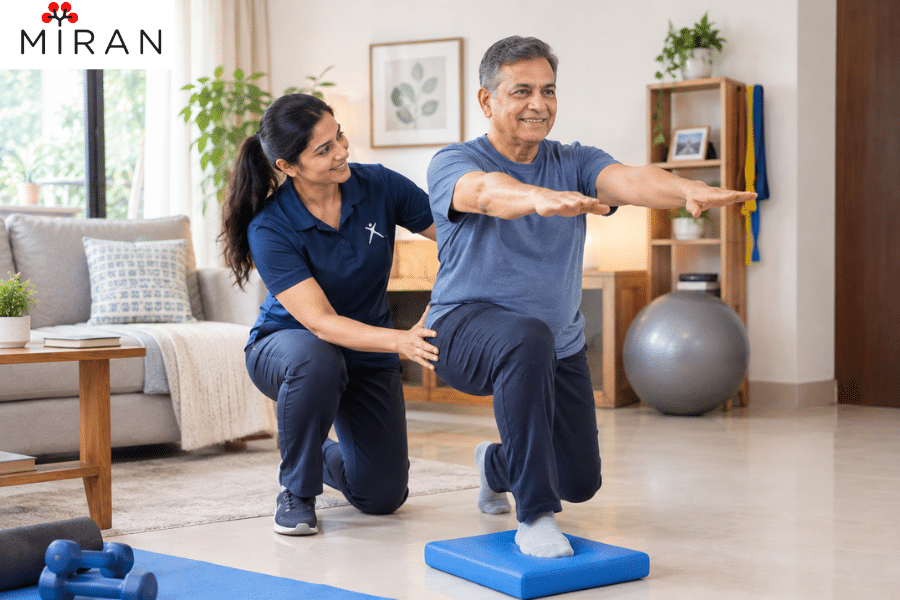

Parkinson’s Rehabilitation | Support Better Movement | Miran
A button that takes longer to fasten. A walk that seems slower than before. Trouble getting up from a chair or taking the first step after standing still. These may seem like small changes, but for someone living with Parkinson’s, they can become part of everyday life.
Parkinson’s is a nervous system disease that can impact a person’s movement, balance and activities of daily living. Everyone’s experience is different, but changes in mobility can gradually affect confidence and independence.
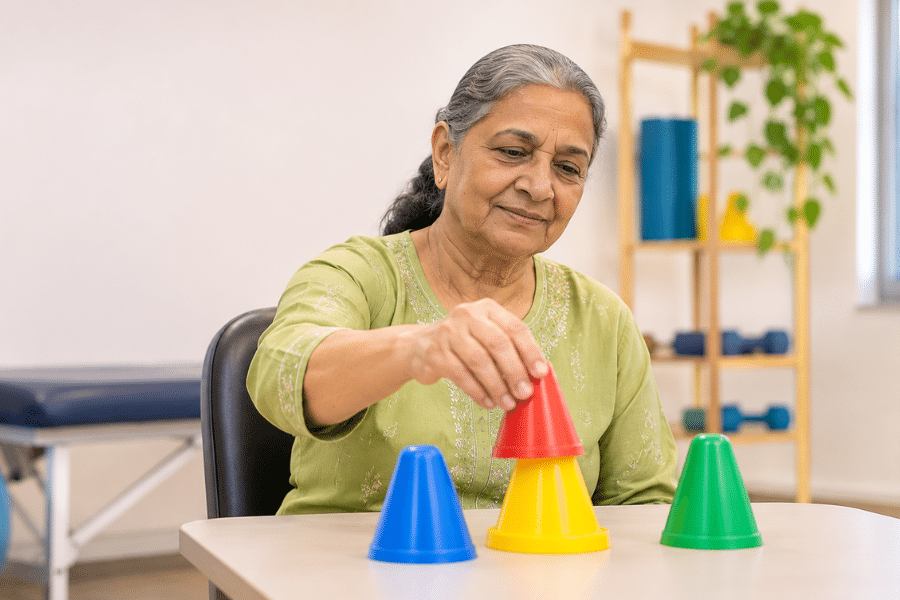
This is why Parkinson’s rehabilitation is about much more than performing a few exercises. It focuses on helping individuals manage movement-related difficulties, practise everyday activities and maintain their quality of life.
A Day with Parkinson’s: Where Does the Challenge Begin?
To understand the importance of rehabilitation, consider how Parkinson’s may affect different moments throughout the day.
Getting Ready in the Morning
Activities such as buttoning clothes, brushing teeth or picking up small objects may become slower due to stiffness or changes in hand coordination. Practising functional movements can help individuals work on these everyday tasks.
Moving Around the House
Gait may be characterised by shorter steps, less arm swing, or a pause before movement is initiated. It can also be hard to turn around in tight spaces. Guided walking and movement practice can help people to gain more control.
Sitting Down and Standing Up
Getting out of a chair or changing positions may require additional effort. Targeted strengthening and functional movement exercises can help you to practise these transitions.
Spending Time with Family
Some people may start to back away from social activities because they feel less confident about walking or keeping their balance. With proper rehabilitation, they may be able to participate in the activities they enjoy more comfortably.
These experiences illustrate the importance of rehabilitation addressing the whole of the person’s daily life and not just one physical symptom.
Rehabilitation Is Not About Doing More; It Is About Moving Better
Every person with Parkinson’s has different movement challenges and personal goals. Therefore, a standard exercise routine may not address everyone’s requirements.
A personalised rehabilitation programme may focus on several key areas:
- Walking and gait training: Practising step length, walking rhythm and direction changes.
- Balance and coordination: Working on stability during standing, walking and everyday movements.
- Strength and flexibility: Supporting muscle function and reducing the impact of stiffness on movement.
- Posture and body control: Practising better alignment and controlled movements.
- Functional activities: Rehearsing practical tasks such as sitting, standing, reaching and turning.
The purpose is to make rehabilitation relevant to real-life situations, so individuals can apply what they have practised in their everyday activities.
Small Victories That Deserve Attention
Progress in Parkinson’s rehabilitation does not always mean making a dramatic physical change. Sometimes, you can see meaningful progress in small achievements.
Consider these examples:
| Everyday challenge | Rehabilitation goal |
| Difficulty taking the first step | Practise movement initiation. |
| Short or shuffling steps | Work on walking patterns |
| Unsteadiness while turning | Improve balance and controlled turning. |
| Difficulty getting up from a chair | Practise functional strength. |
| Reduced arm movement | Encourage coordinated movement. |
| Difficulty maintaining posture | Improve postural awareness. |
The improvements individuals work towards will depend on their condition, abilities and response to rehabilitation. Consistent practice and appropriate guidance can help them maintain useful movement skills.
A More Personal Approach to Living with Parkinson’s
At Miran, rehabilitation is considered in the context of an individual’s overall health and everyday life. Rather than looking only at a diagnosis, the focus is on understanding how movement difficulties affect the person’s routine, confidence and independence.
At Miran Neuro Physiotherapy and Rehab, physiotherapy guidance is planned around individual requirements and functional goals. This may involve gait training, balance activities, strengthening, coordination exercises and practising movements that are important in daily life.
Family involvement is also useful. Carers may learn how to appropriately support, encourage safe movement and understand the importance of regular practice.
The goal is not to make every day the same or promise a full recovery. It is to help people work towards managing their challenges and staying active in the things that matter to them.
The Role of Family Beyond the Therapy Session
Living with Parkinson’s can affect the entire family, not just the individual diagnosed with the condition. Family members often become an important part of the support system.
A few thoughtful habits can make daily life more manageable:
- Keep frequently used objects within easy reach.
- Maintain clear walking spaces at home.
- Allow enough time for everyday activities without rushing.
- Encourage suitable physical activity as advised by the physiotherapist.
- Provide support when required while respecting the individual’s independence.
- Maintain regular communication with healthcare professionals.
A supportive environment, combined with appropriate rehabilitation, can help individuals feel more comfortable managing their daily routines.
Frequently Asked Questions
What is Parkinson’s rehabilitation?
Parkinson’s rehabilitation is a personalised approach that uses physiotherapy and guided exercises to help individuals manage movement difficulties and maintain everyday activities.
How can physiotherapy help people with Parkinson’s disease?
Physiotherapy may help improve walking patterns, balance, coordination, posture, flexibility and muscle strength, depending on the individual's needs.
Can Parkinson’s rehabilitation improve walking and balance?
Yes. Targeted rehabilitation may help individuals practise safer walking, improve movement control and work on balance-related difficulties.
Healthy Tips: Every Step Forward Matters
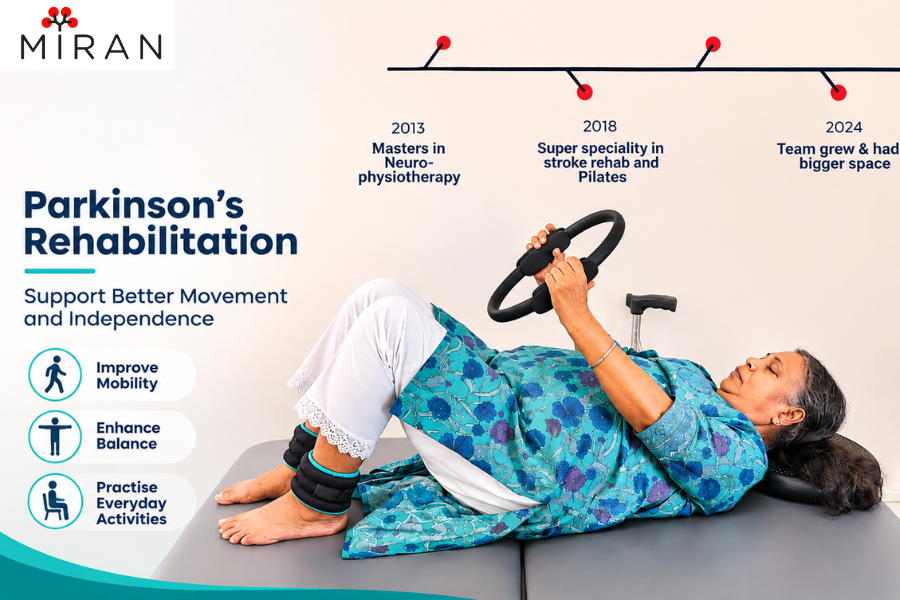
Parkinson’s may change the way a person moves, but it does not take away their need for independence, connection and meaningful everyday experiences. With suitable guidance, regular practice and a personalised approach, individuals can continue working towards better movement and quality of life.
Parkinson’s rehabilitation is a continuing journey that focuses on individual abilities, practical goals and the things that make everyday life meaningful.
At Miran Neuro Physiotherapy and Rehab, Santacruz, the approach to rehabilitation focuses on overall wellbeing, functional movement and individual needs. Through personalised physiotherapy, individuals living with Parkinson’s can receive guidance to work towards greater confidence, mobility and independence.
Image Reference: Magnific
Disclaimer: All trademarks, logos, and brand names are the property of their respective owners. All company, product, and service names used on this website are for identification purposes only. Use of these names, trademarks, and brands does not imply endorsement.