
Balance Exercise Therapy | Improve Stability and Movement | Miran
Have you ever felt wobbly when walking, had difficulty standing on one leg or hesitated before going up the stairs? Occasionally these little moments are a sign that your body needs a little more help with balance and coordination.
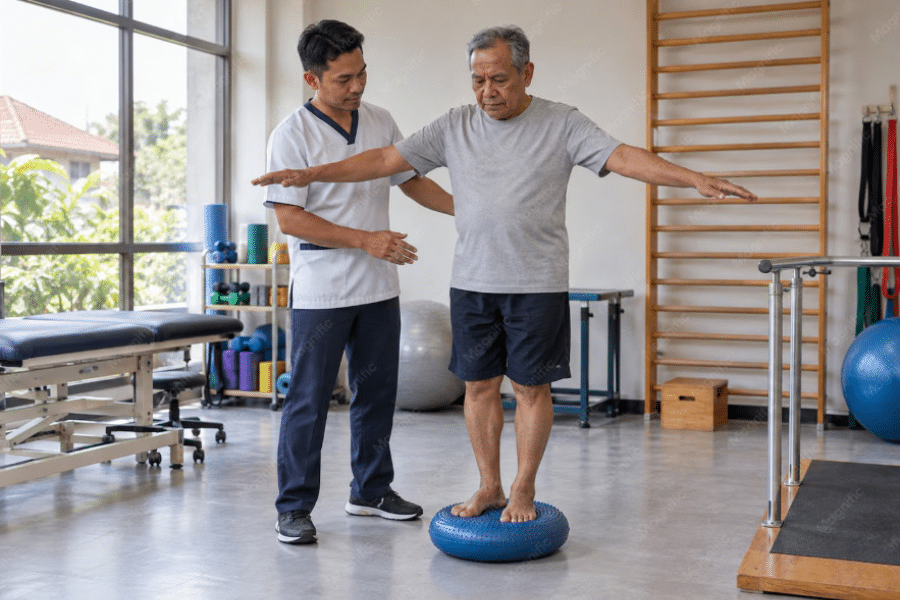
Balance is a key part of pretty much everything we do. Our body is constantly trying to keep us stable, whether we are getting out of bed, walking outside, reaching for things or changing direction. However, ageing, muscle weakness, injuries, neurological conditions and reduced physical activity can all affect this ability.
This scenario is where balance exercise therapy becomes valuable. It focuses on improving body control, coordination and stability through guided movements that help make everyday activities safer and more confident.
When Everyday Movements Start Feeling Difficult
Balance problems do not always occur only occasionally. Sometimes, they develop gradually and become noticeable during routine activities.
You may experience:
- You may feel unsteady when walking or standing.
- Problems with posture maintenance when turning or changing direction.
- Hesitance to climb stairs or obstacles.
- Often stumbles or has fear of falling.
- They also have difficulty getting up from a chair without assistance.
- They are less confident getting around by themselves.
These challenges can affect more than physical movement. They may also lead people to avoid outdoor activities, social gatherings and hobbies they previously enjoyed.
Understanding the Science Behind Better Balance
Maintaining balance is a coordinated process involving several parts of the body. The brain receives information from the eyes, inner ear, muscles and joints to understand body position and movement.
Three important systems contribute to this process:
- Visual System
Our eyes help us understand our surroundings, identify obstacles and adjust body movements accordingly.
- Vestibular System
Located in the inner ear, this system helps the body understand head movement and maintain orientation.
- Proprioceptive System
This system enables us to know where our joints and muscles are in space without having to look at them constantly.
When these systems don’t interact well, it can be difficult to maintain stability. Balance exercise therapy uses specific activities to train coordination and the body’s response to movement.
What Happens During Balance Exercise Therapy?
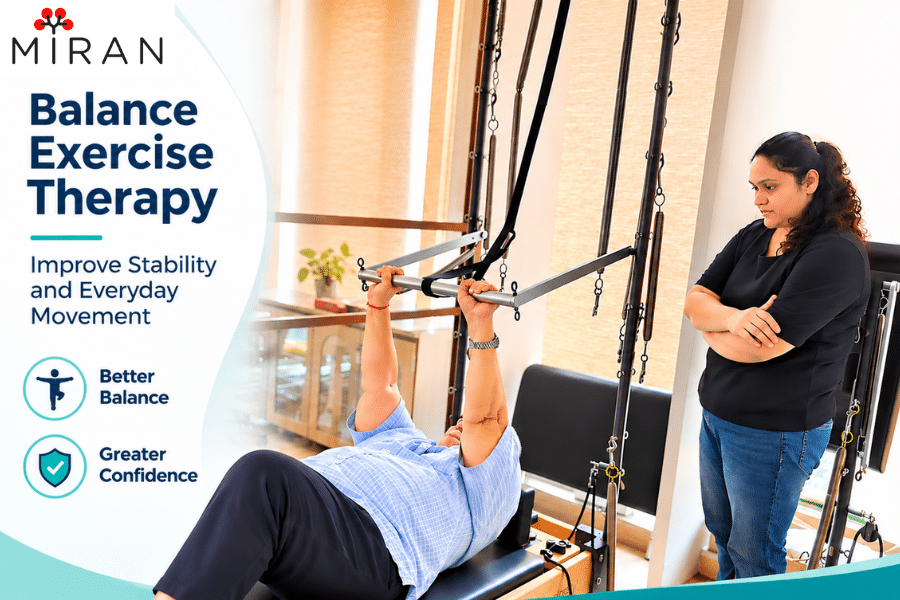
Rather than following the same routine for everyone, balance training involves exercises selected according to an individual’s physical abilities and requirements.
Here are some commonly used approaches:
Weight-Shifting Activities
These exercises involve gently shifting your body weight from one leg to the other or in other directions. They teach you how to shift your centre of gravity.
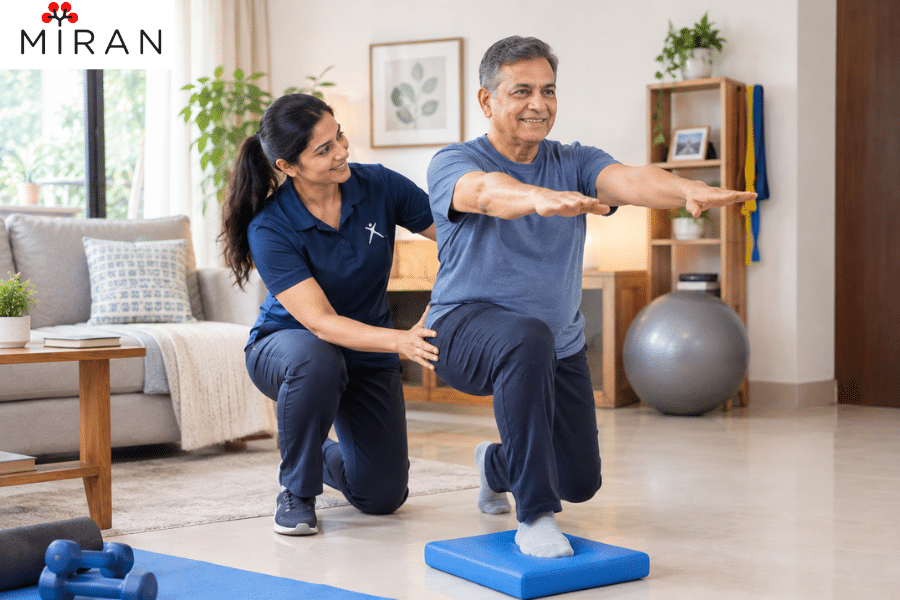
Single-Leg Standing
Standing on one leg, with appropriate support when needed, challenges stability and encourages coordination between different muscle groups.
Walking and Direction Changes
Practising controlled walking, turning and changing direction helps improve balance during everyday movement.
Sit-to-Stand Practice
Repeatedly moving between sitting and standing positions helps develop functional strength and control.
Stepping and Coordination Exercises
Stepping forward, sideways or over low obstacles can help improve movement planning and body awareness.
The difficulty of these activities should be adjusted according to the individual’s condition and safety requirements.
How Miran Makes Balance Training More Meaningful
At Miran Neuro Physiotherapy and Rehab, the focus extends beyond treating a particular physical difficulty. The approach also considers overall health, functional movement, confidence and independence.
For individuals experiencing balance or mobility challenges, the team works to understand their movement patterns and everyday difficulties before planning suitable exercises.
Depending on the individual’s assessment, the programme may include:
- Personalised balance and coordination activities.
- Strengthening exercises for better postural control.
- Walking practice to support functional mobility.
- Movement training for everyday tasks.
- Guided exercises that progress according to individual ability.
The objective is to help people feel more comfortable with their movements and participate more confidently in daily life. Whether someone wants to walk more steadily, improve coordination or feel safer while performing routine activities, the programme is planned around their individual goals.
Beyond Exercise: Building Confidence in Everyday Life
But balance training progress is not measured by how long someone can stand on one leg. And you can see it in the small improvements, too.
For example, an older adult may feel more comfortable walking around the house. A person recovering from a neurological condition may become better at changing direction. Some people might feel more confident standing up from a chair or walking around familiar surroundings.
These practical enhancements can make everyday life easier and foster greater independence.
And consistency counts, too. A suitable programme that includes a routine of physical activity, staying active, and practicing movements under professional supervision can help with progress in the long run.
A Safer Approach to Improving Balance
Balance exercises should always match the individual’s current abilities. Beginners may need a stable support surface or supervision, particularly if they have a history of falls or significant mobility difficulties.
Avoid attempting challenging movements without guidance. If you experience dizziness, pain or unusual discomfort, stop the activity and seek professional advice.
A physiotherapist can assess your movement, identify areas that need attention and recommend appropriate exercises.
Frequently Asked Questions
Who can benefit from balance exercise therapy?
Older adults, people recovering from injuries or surgery, and individuals with neurological conditions or mobility difficulties may benefit from personalised balance training.
What exercises are included in balance training?
Common exercises include weight shifting, single-leg standing, walking practice, sit-to-stand movements and stepping exercises.
Can physiotherapy improve balance in older adults?
Yes. Physiotherapy may help older adults work on muscle strength, posture, coordination and walking ability to support safer and more confident movement.
Healthy Tips
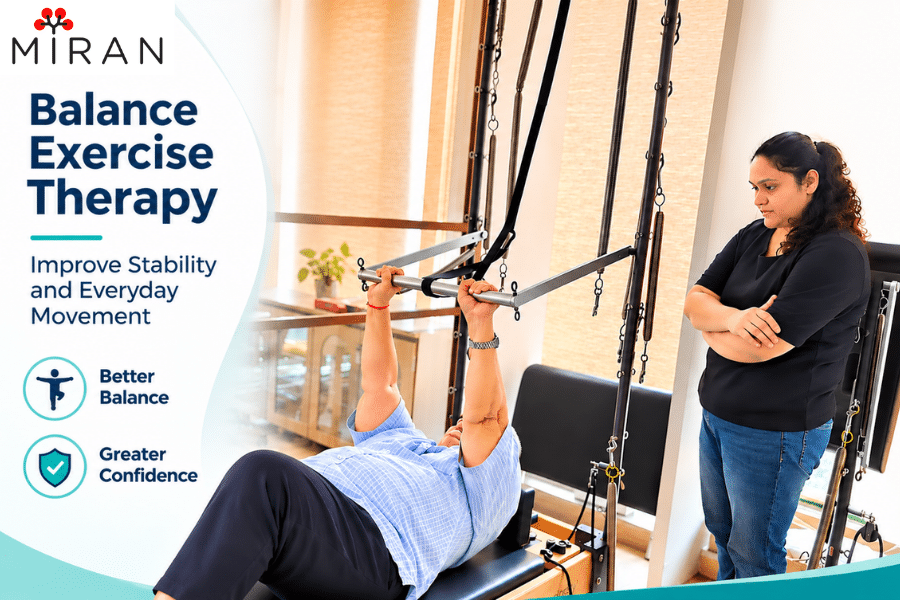
Good balance is not just about standing without falling. It is about moving comfortably, maintaining independence and feeling confident while performing everyday activities.
With consistent practice and the right professional support, balance exercise therapy can help individuals work towards better stability, coordination and functional movement.
At Miran Neuro Physiotherapy and Rehab in Santacruz, we are dedicated to enhancing overall wellbeing through personalised physiotherapy and rehabilitation. Because improving movement is not only about overcoming physical challenges; it is also about helping people enjoy everyday life with greater confidence.
Image Reference: Magnific
Disclaimer: All trademarks, logos, and brand names are the property of their respective owners. All company, product, and service names used on this website are for identification purposes only. Use of these names, trademarks, and brands does not imply endorsement.