

Parkinson’s Disease Physiotherapy in Mumbai for Better Movement & Independence
At Miran Physiotherapy & Pilates, we provide personalised Parkinson’s disease physiotherapy in Mumbai to help individuals manage movement difficulties and maintain independence in everyday life. Parkinson’s can affect walking, balance, posture, coordination, and the ability to perform routine activities.
Our neuro physiotherapists design structured rehabilitation programs based on your symptoms, movement abilities, lifestyle, and personal goals. Through regular therapy and functional training, we help you stay active, move more safely, and maintain physical abilities for longer.

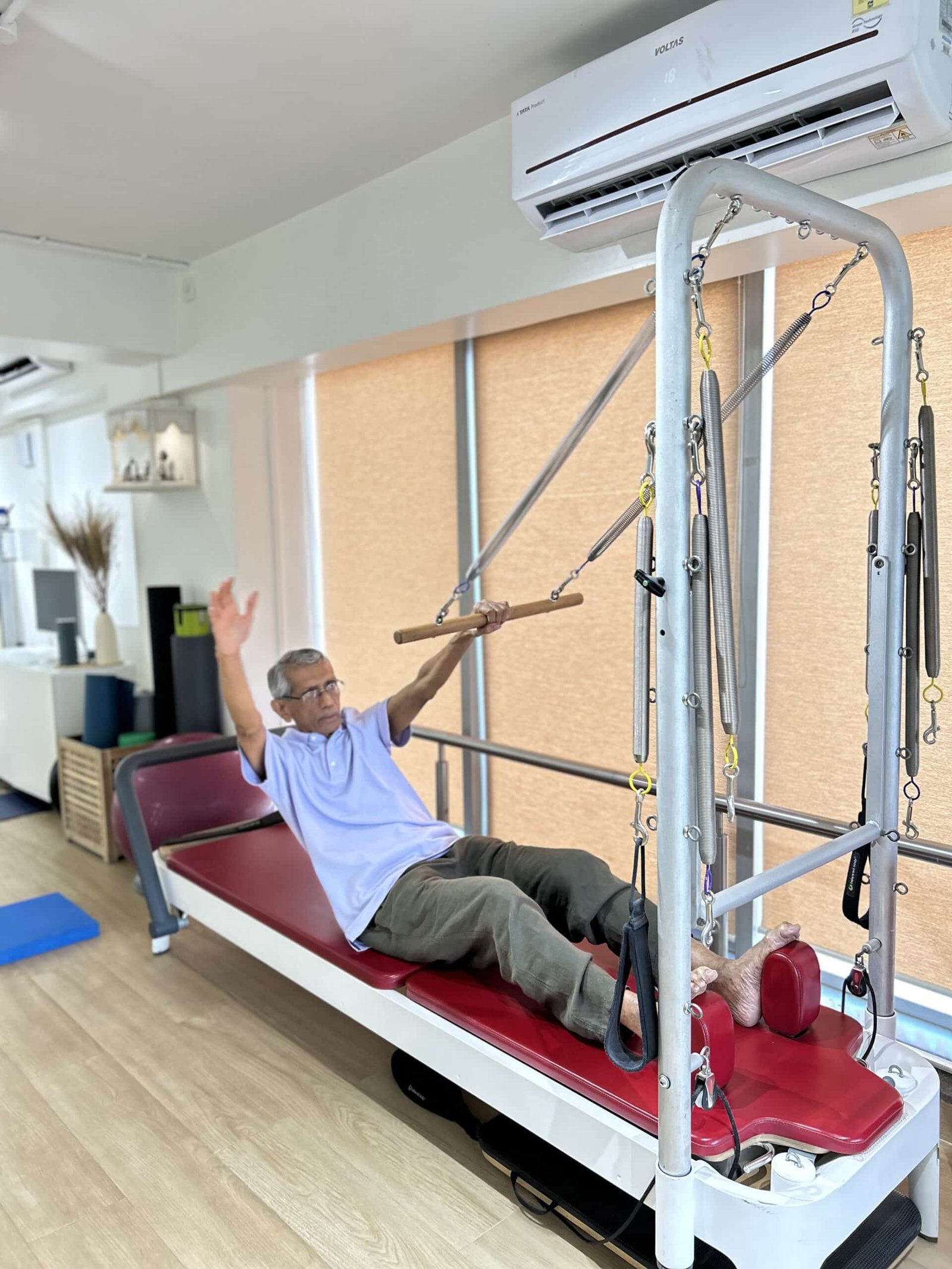
Personalised Physiotherapy for Parkinson’s Disease
Parkinson’s disease affects movement differently from one individual to another. Some people may experience stiffness and slow movements, while others may have difficulty with balance, walking, posture, or turning.
Our Parkinson’s physiotherapy programs in Mumbai focus on maintaining movement quality and improving everyday function through:
- Improving walking and gait patterns
- Managing stiffness and reduced mobility
- Improving balance and postural control
- Working on movement speed and coordination
- Improving strength and flexibility
- Practising turning, transfers, and functional movements
- Reducing the risk of falls
- Maintaining independence in daily activities
Exercises and activities are progressed according to your abilities and response to therapy.
Exercises and activities are progressed according to your abilities and response to therapy.
Physiotherapy for Parkinson’s disease can include targeted movement strategies, repetitive practice, balance activities, and functional exercises designed around the challenges you experience.
At Miran Physiotherapy & Pilates, your rehabilitation may include:
- Neuro physiotherapy exercises
- Gait and mobility training
- Balance and fall-prevention training
- Posture and flexibility exercises
- Functional movement practice
- Strength and endurance exercises
- Cueing and movement strategies
- Robotic-assisted rehabilitation where appropriate
- Aquatherapy for selected patients
The combination of techniques depends on your assessment, symptoms, functional needs, and rehabilitation goals.
Stay Active & Independent With Parkinson’s Rehabilitation
Living with Parkinson’s disease does not mean that movement and physical activity should stop. Regular, appropriately supervised exercise can be an important part of maintaining physical function and managing movement-related challenges.
Our therapists work on practical activities that are relevant to your everyday routine, such as:
- Walking safely and efficiently
- Getting up and sitting down
- Turning and changing direction
- Improving posture while standing and walking
- Reaching and functional movements
- Maintaining flexibility and joint mobility
- Building physical endurance
- Performing daily activities with greater confidence
Your program is reviewed and adapted as your needs change over time.
Parkinson’s Disease Physiotherapy in Mumbai
Let’s Answer Your First Questions
1. What is Parkinson’s disease physiotherapy?
Parkinson’s physiotherapy is a specialised rehabilitation approach that focuses on movement-related difficulties associated with Parkinson’s disease. Therapy may address walking, balance, posture, stiffness, strength, coordination, and functional mobility.
2. Can physiotherapy help people with Parkinson’s disease?
Yes. Physiotherapy can help individuals work on mobility, balance, strength, flexibility, walking, and functional movement. The specific treatment approach depends on the person’s symptoms and abilities.
3. What exercises are useful for Parkinson’s disease?
Exercises may include walking and gait practice, balance training, strengthening, flexibility exercises, posture work, coordination activities, and functional movement training. A physiotherapist can select and progress exercises based on individual needs.
4. Can physiotherapy improve walking in Parkinson’s disease?
Physiotherapy can help address walking difficulties by working on gait patterns, balance, coordination, turning, step initiation, and movement strategies. The focus depends on the individual’s specific walking challenges.
5. Can physiotherapy help with stiffness caused by Parkinson’s?
Therapy may include mobility, stretching, active movement, strengthening, and functional exercises to help maintain flexibility and manage movement limitations associated with stiffness.
6. Does Parkinson’s physiotherapy help with balance?
Yes. Balance and postural control are commonly addressed through targeted exercises and functional activities. Therapy may also include strategies designed to improve safety and reduce fall risk.
7. Is exercise safe for people with Parkinson’s disease?
Exercise can be an important part of Parkinson’s management, but activities should be appropriate for the individual’s physical abilities and medical condition. A physiotherapist can help determine suitable exercises and levels of intensity.
8. When should I start physiotherapy for Parkinson’s disease?
Physiotherapy can be considered at different stages of Parkinson’s disease. Starting an appropriate exercise and movement program early may help establish healthy movement habits and maintain physical function.
9. Can Parkinson’s physiotherapy help with daily activities?
Yes. Functional rehabilitation can include practising movements involved in everyday activities, such as standing up, sitting down, walking, turning, reaching, and transferring.
10. How often should someone with Parkinson’s attend physiotherapy?
The frequency depends on symptoms, functional limitations, current activity level, and rehabilitation goals. Your physiotherapist can recommend a suitable schedule following an assessment.
Expert Parkinson’s Disease Treatment in Santacruz to Help You Keep Moving
Although Parkinson’s disease is a long-term neurological condition, the right rehabilitation can improve movement, balance, strength, and confidence.
At Miran Physiotherapy & Pilates, we provide personalised Parkinson’s disease treatment in Santacruz, combining neuro physiotherapy, robotic rehabilitation, aquatherapy, and functional training to help you achieve the best possible quality of life.
Take the first step towards better mobility with a treatment plan created specifically for your needs.